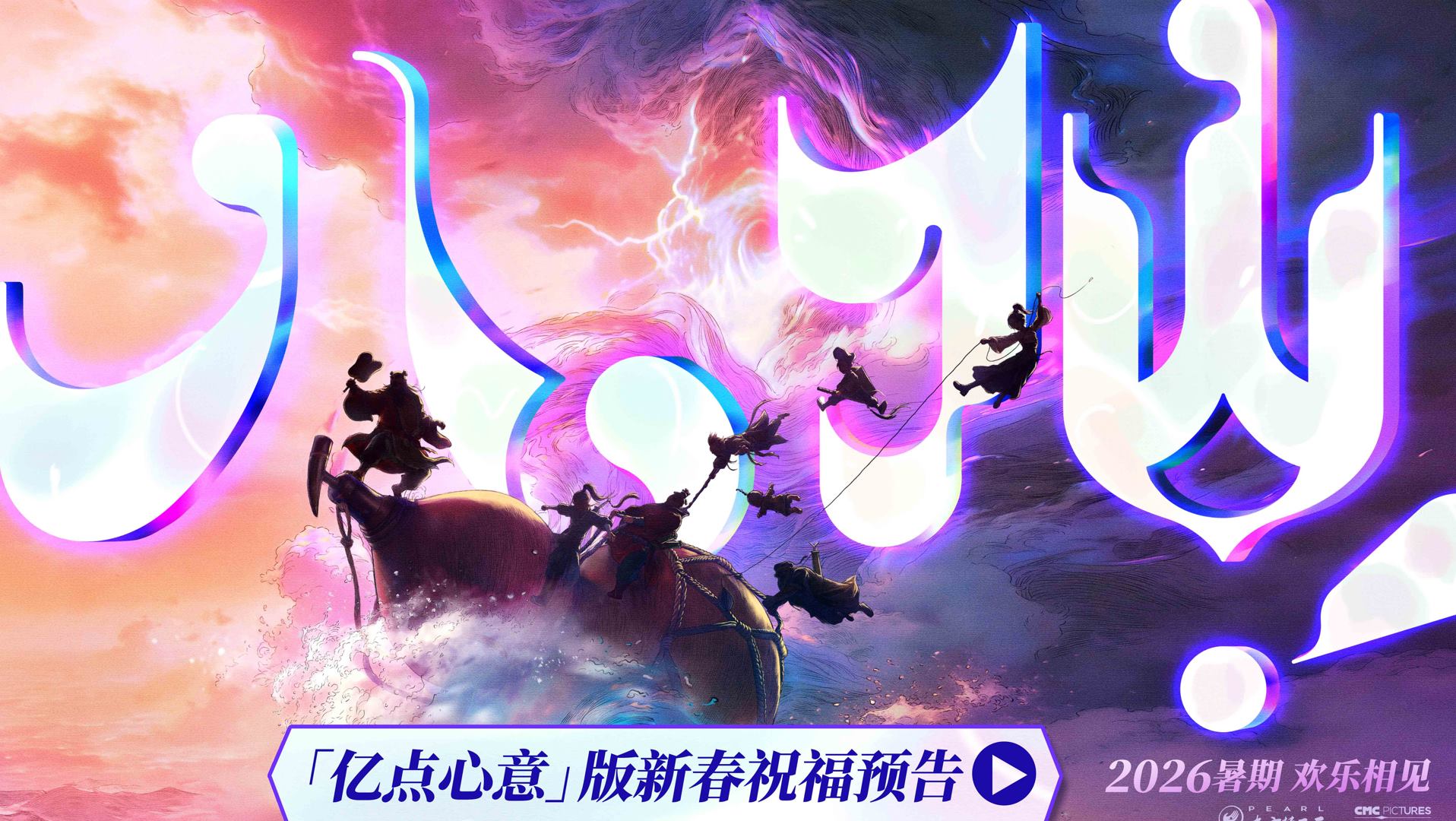
Did All Wishes Come True receive a Golden Dragon award?
Yes. Yangcheng Evening News reported on October 2, 2026 that All Wishes Come True (八仙!) was one of the ten annual honorees at the 23rd Golden Dragon Awards for Chinese animation and comics in Guangzhou. It shared the recognition with nine other works, rather than winning a sole Best Film prize.
This is industry recognition, not an audience rating or proof that every viewer liked the film. Use it as dated context alongside the strengths and cautions below. The October 2 award report linked in Sources names all ten recipients.
 Editorial visual
What do the cited English-language reviews cover?
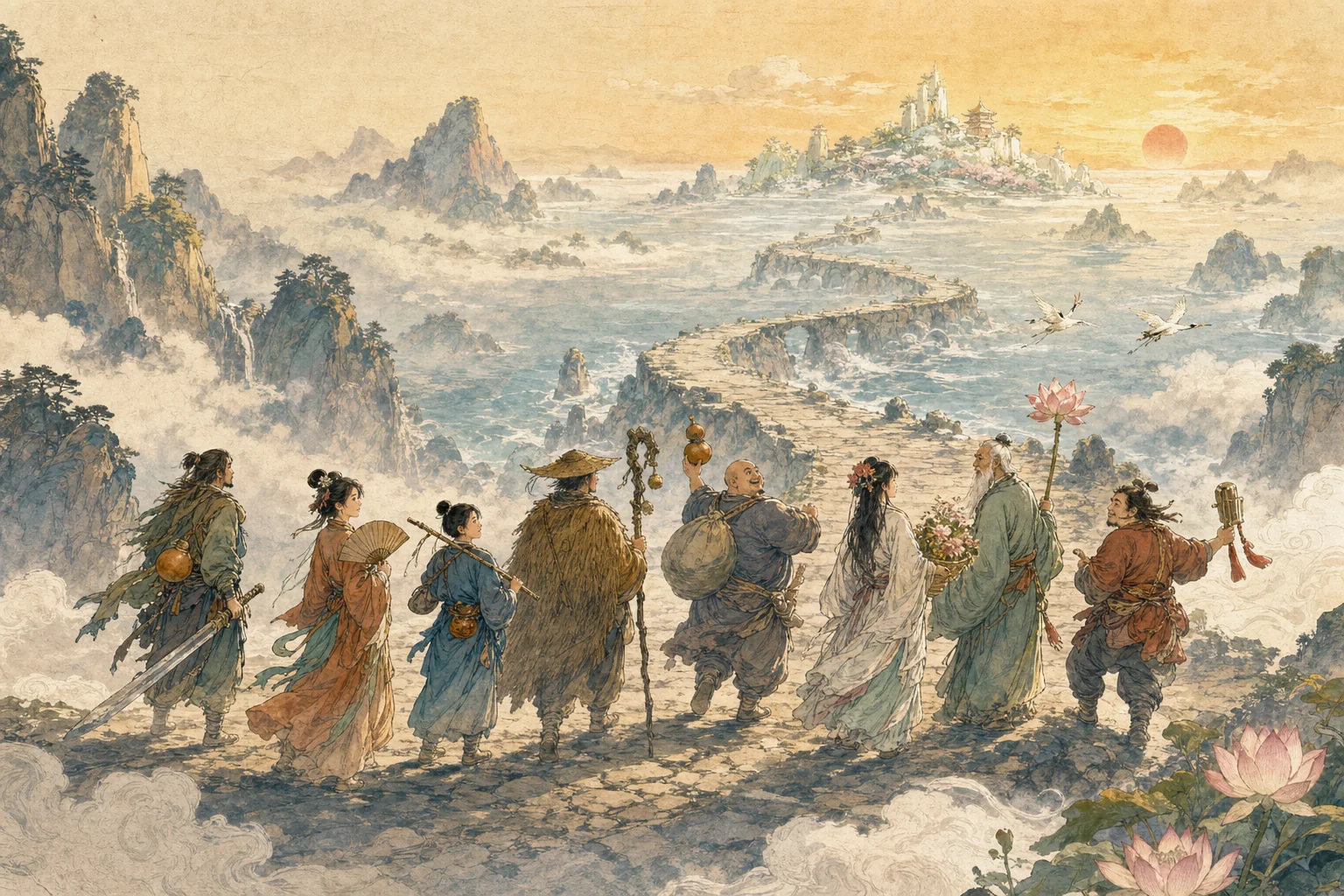
The international review phase began around the North American theatrical opening. South China Morning Post has published an attributed English-language review that discusses the film as a reinvention of the Eight Immortals myth. It is one attributed critical assessment, not proof of a universal consensus.
This guide does not manufacture an aggregate rating or freeze a changing platform percentage into a permanent claim. Professional reviews, audience scores and box office measure different things; read the author, publication date and sample size before treating any number as representative.
Why are the eight characters not given equal screen time?
In Dan Sarto's October 5 Animation World Network interview with director Mu Zhengyang and Pearl Studio CEO Catherine Yin, Mu explains that key characters and their relationships carry the themes, while other characters also serve as mirrors rather than receiving mechanically equal screen time.
Our reading prompt is to ask whether each relationship changes a decision and whether supporting characters have indispensable actions. This is editorial guidance, not a new audience score or evidence of consensus. The AWN interview is linked in Sources.
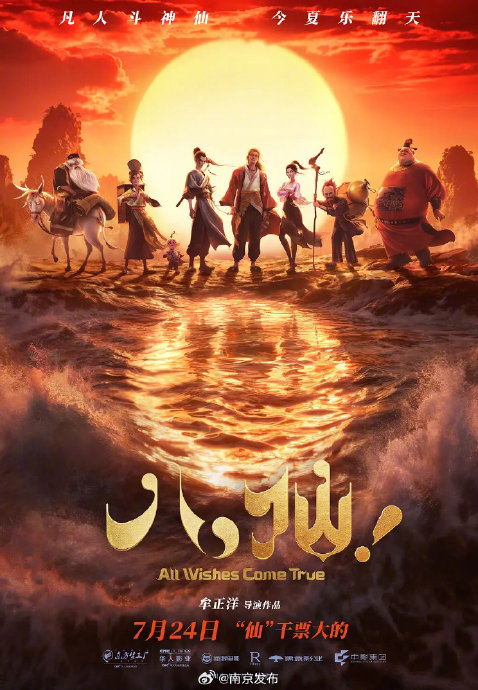 Official public material
What does the October 1 director interview add?
Patrick Gibbs interviewed Mu Zhengyang for SLUG Magazine on October 1, 2026. Mu discusses redesigning Zhongli Quan and giving the eight characters distinct movements, expressions and reactions.
This is an account of creative intent, not an audience score or proof of critical consensus. Read the interview alongside independent reviews rather than adding it to an aggregate rating.
Who is this movie for?
The film is an easy recommendation for viewers curious about Chinese animation beyond a single chosen hero. It treats the Eight Immortals as a mismatched group of ordinary people, allowing courage, vanity, suspicion and generosity to collide before the familiar legend settles into place.
Knowledge of Chinese mythology is optional. Familiarity adds recognition, but the movie's immediate question—whether flawed people can cooperate when the system favors power—works without prior study.
Animation, action and visual identity
The production's most distinctive choice is to make Penglai feel like a social world rather than a decorative cloud palace. Public production interviews describe research into Chinese art, folk imagery and character silhouettes. In the finished design language, props, costume shapes and colour help keep an eight-person ensemble readable during comedy and action.
The action is valuable when it expresses teamwork. The characters are not interesting because each unlocks a larger beam of power; the staging asks how different bodies, tools and temperaments can share one problem.
How was the animated fight choreography designed?
In Gene Ching's September 10, 2026 KungFuMagazine interview, Mu Zhengyang describes Huang Chengxi's early action-design foundation and Su Hang presenting several options for the director to choose from. Animation gave the team freedom beyond a live performer's physical limits. This does not establish that the film used motion capture.
For a spoiler-light viewing check, follow the source of force, the space between characters and the handoff to a teammate. Exaggeration can still be readable. This is our viewing advice, not a claim that every fight obeys real-world physics. The source interview contains plot spoilers; its production-method explanation does not require reading the ending discussion.
Read the Chinese scene-by-scene action guide (contains spoilers) →
Story, characters and humour
The ensemble structure creates the movie's warmth and its friction. Small disagreements make later cooperation feel earned, and workplace or street-level humour keeps the mythology from becoming solemn exposition. Several jokes also depend on language and cultural associations, so subtitle quality can affect rhythm for international audiences.
The trade-off is compression. Eight protagonists compete with Penglai's rules, antagonistic forces and world-building. Viewers who prefer a single tightly focused lead may find the middle crowded, while ensemble fans are more likely to enjoy tracking changing loyalties.
Strengths, weaknesses and final recommendation
Its strengths are a clear human premise, a visually legible group, action based on cooperation and a willingness to question what 'becoming immortal' should mean. Its weaknesses are the cognitive load of eight arcs and a runtime that can feel demanding for younger subtitle readers or viewers expecting a brisk family comedy.
Is it worth watching? Yes, if the premise and ensemble appeal to you—and especially if you want mythology adapted as living popular culture rather than displayed behind glass. Choose the language version carefully, allow enough time, and use the ending guide only after the credits if you want to preserve the reveals.
After watching: which songs can you find on music platforms?
Two released singles are a useful starting point if a song stayed with you after the film. Apple Music labels 全世界的雨, performed by Ella Chen and Zhou Shen, as the movie's theme song; its release date is July 18, 2026. The same platform labels 过海, by Isabelle Huang (黄龄) and Wang Heye, as a song featured in the film, released July 16, 2026.
Search for Quan Shi Jie De Yu or Guo Hai alongside the performers, then check the Chinese title and the 八仙! film credit. These are pinyin search aids, not confirmed official English song titles. A single release is not a complete soundtrack, and its label does not establish where the song plays in the movie.
Use the original [theme-song release](https://music.apple.com/us/album/%E5%85%A8%E4%B8%96%E7%95%8C%E7%9A%84%E9%9B%A8-%E5%85%AB%E4%BB%99-%E7%94%B5%E5%BD%B1%E4%B8%BB%E9%A2%98%E6%9B%B2-single/6790968197) or [Guo Hai release](https://music.apple.com/us/album/%E8%BF%87%E6%B5%B7-%E5%85%AB%E4%BB%99-%E7%94%B5%E5%BD%B1%E6%8F%92%E6%9B%B2-single/6790968339) to check listening and playlist options in your region. Availability can vary. For more detail, open our [song-identification guide (Chinese)](/guide/soundtrack-and-theme-song); this site does not reproduce full lyrics or provide audio downloads.
Sources and evidence policy
Film facts are checked against attributable interviews, official film information and active cinema or distributor pages. A source can support only the field it actually states.
- Yangcheng Evening News: Golden Dragon annual honorees, October 2, 2026 ↗
- Yicai interview with director Mu Zhengyang ↗
- Xinhua interview on the characters, mythology and production ↗
- 1905.com interview on character and performance clues ↗
- 1905.com film profile for Ba Xian! ↗
- AWN: Dan Sarto interviews Mu Zhengyang and Catherine Yin, October 5, 2026 ↗
- SLUG Magazine: Patrick Gibbs interviews Mu Zhengyang, October 1, 2026 ↗
- South China Morning Post review published for the international release ↗
- KungFuMagazine: Gene Ching interviews Mu Zhengyang and Catherine Yin, September 10, 2026 (source contains spoilers) ↗