Who recruits the eight?
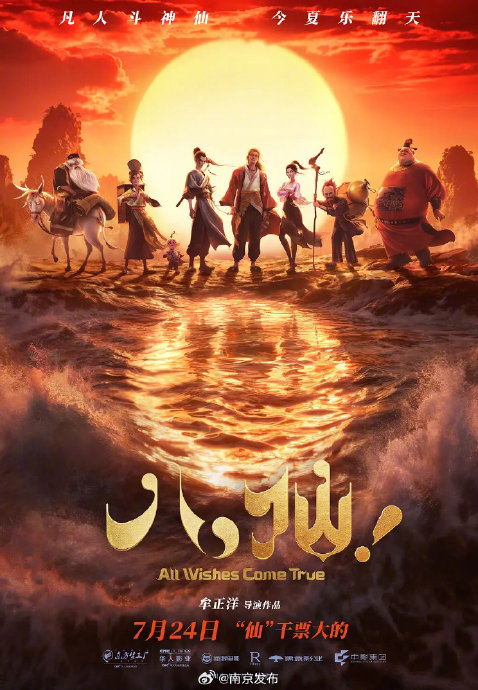
Purple Plan’s film synopsis identifies Lü Dongbin and Zhongli Quan as the pair planning to impersonate immortals and rob the vault. They recruit He Xiangu, Tieguai Li, Han Xiangzi, Cao Guojiu, Lan Caihe and Zhang Guolao. These are movie relationships, not a list of traditional powers.
 Editorial visual
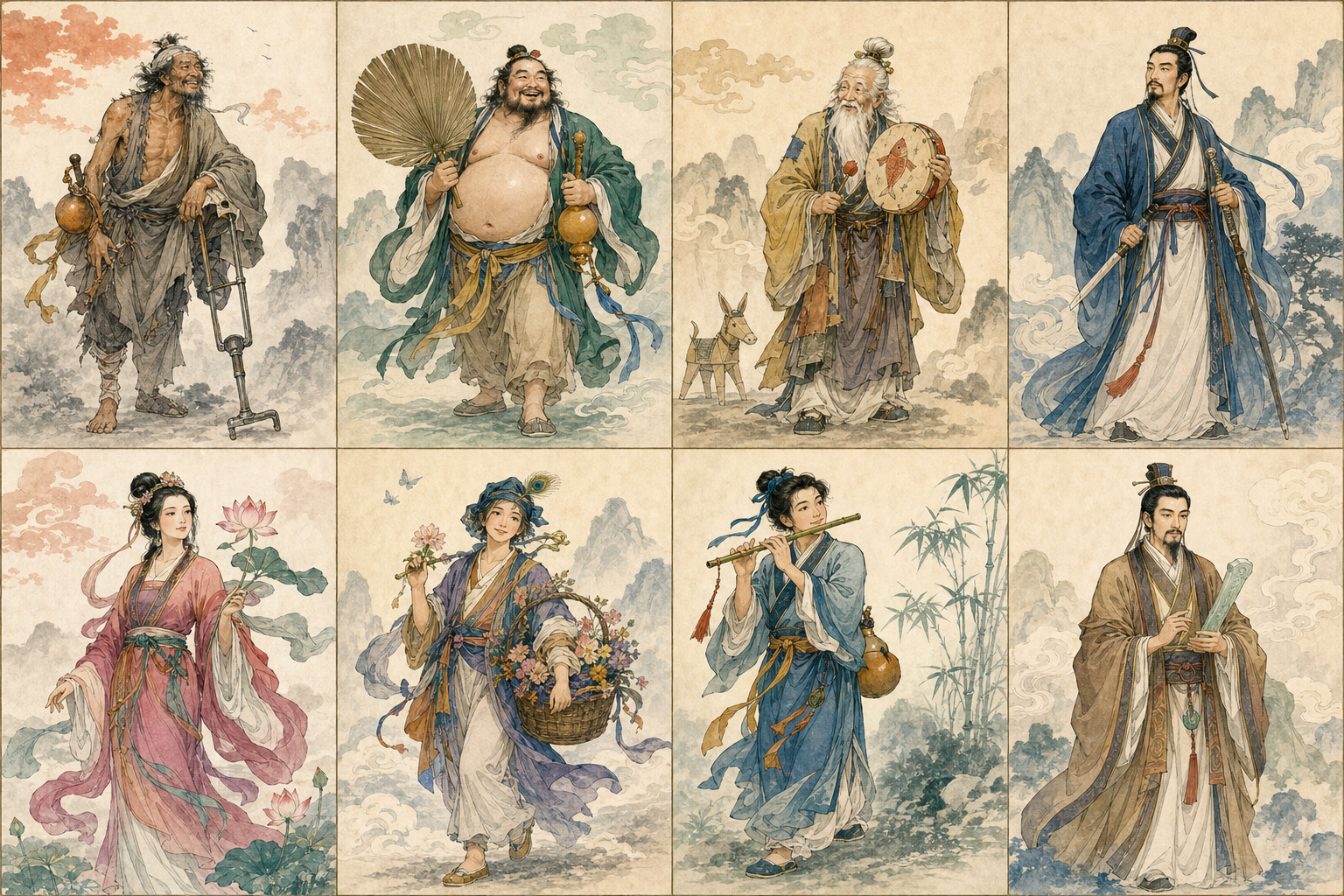
The eight names at a glance
The core group is Tieguai Li, Han Zhongli (also widely called Zhongli Quan), Zhang Guolao, Lü Dongbin, He Xiangu, Lan Caihe, Han Xiangzi and Cao Guojiu. English spellings vary because names may be romanised with or without tone marks, and older translations sometimes use different word order.
The movie does not require viewers to memorise eight biographies before buying a ticket. Silhouette, colour, movement, voice and attitude do most of the identification work. Knowing the names simply makes the first crowded group scenes easier to follow.
- Li Tieguai (also written Tieguai Li) — the name linked with the iron crutch tradition.
- Zhongli Quan (also known as Han Zhongli) — a major narrative anchor in this adaptation.
- Zhang Guolao — the elder name in the familiar eight-person roster.
- Lü Dongbin (also written Lu Dongbin) — the scholar-swordsman figure with many regional legends.
- He Xiangu — the only woman in the standard modern roster.
- Lan Caihe — traditionally associated with freedom and an ambiguous social identity.
- Han Xiangzi — the youthful figure often associated with music and the flute.
- Cao Guojiu — a name tied to rank, order and courtly imagery in later tradition.
Why are they not already perfect immortals?
The adaptation begins before the public legend. That choice gives the characters room to fail, bargain, misunderstand one another and make decisions for practical reasons. Traditional iconography can help a viewer recognise a name, but it should not be used to fill in a movie age, relationship or power that the film has not stated.
This distinction matters because there is no single uncontested 'original novel' containing the complete modern Eight Immortals lineup. Their stories developed through religious practice, drama, literature, regional tales and visual art over a long period.
 Official public material
Who carries the main story?
All eight characters are visually and comically distinct, but equal recognition does not mean equal dramatic weight. Han Zhongli, Lü Dongbin and He Xiangu form an important transmission line through the story, while the others contribute different skills, friction and points of view. Some viewers enjoy that focused spine; others want more independent arcs for the remaining group.
The fairest way to discuss the ensemble is to ask who makes a choice that changes the plot, who changes another character, and who mainly supplies a memorable function. That produces a more useful answer than counting seconds or declaring a single 'real protagonist'.
How should international viewers learn the characters?
Start with names and faces, then add one relationship at a time. English subtitles may use pinyin rather than translate every title or object, so matching the spelling to an official character poster is more reliable than guessing from an unofficial subtitle list.
After watching, compare the film's version with traditional material. The interesting question is not whether every costume matches one late historical image, but why the filmmakers retained or changed a particular symbol for this story.
Sources and evidence policy
Film facts are checked against attributable interviews, official film information and active cinema or distributor pages. A source can support only the field it actually states.